
Building Elovi’s creative advantage
How I turned competitive research and brand context into a repeatable process for creating ads.
 Sonny PatelLivePublished
While building Elovi, I kept finding useful advertising ideas that still needed a lot of work before they became something we could use.
Each idea came with a chain of decisions. What makes this interesting? Is it the message, the visual, or the way the offer is explained? How would that translate to our audience? What would it look like with our products, our voice, and our actual offer?
That led me to build Elovi Creative Studio: a private workspace that brings competitive research, creative development, and review into one process.
Elovi is the medical weight-management company I’m building. Working across the brand, product, and customer experience gives me a close view of the small tasks that accumulate around launching a business. Creative production is one of them. A single ad can involve research, positioning, copy, design, product assets, and several rounds of judgment.
The early AI creative experiments have already given me concrete Elovi ads to react to and refine. They also helped me define what a useful internal tool needed to do. I wanted to preserve the thinking behind a good creative, carry our brand context forward, and make the next iteration easier to pick up.
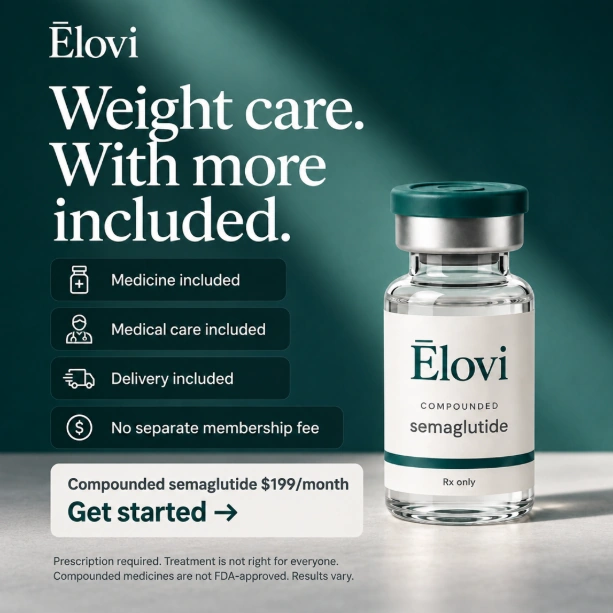
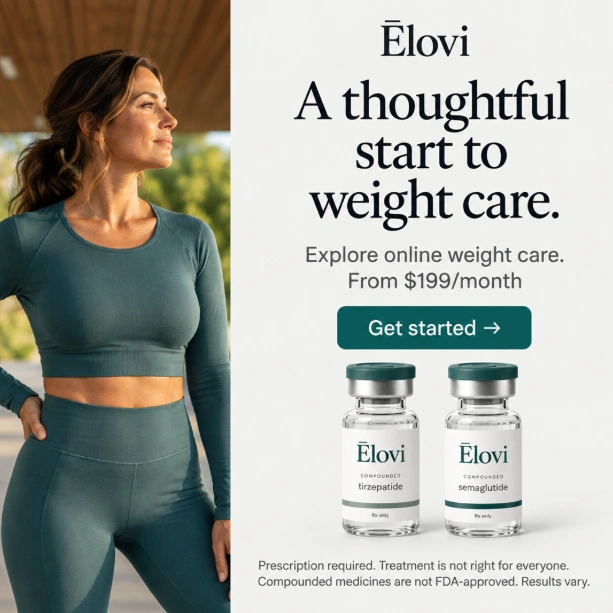
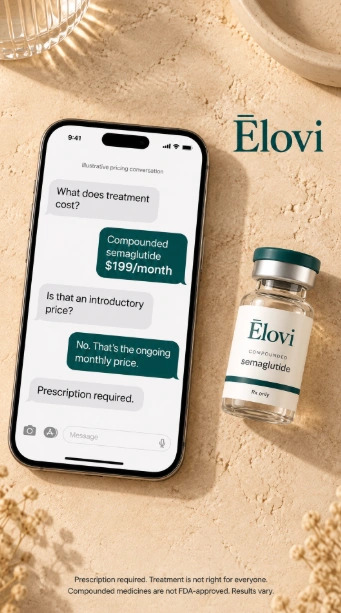
The studio organizes the work around a focused shortlist of references. Each reference becomes a starting point for a creative decision: what is the underlying idea, and does it make sense for Elovi?
Take a pricing-led ad. Its useful feature might be how clearly it lets someone compare two options. That gives us a communication problem to solve with our own offer, wording, and visual direction. The resulting concept should feel specific to Elovi.
I’m careful about what competitor research can tell us. Seeing an ad in circulation gives us a reason to investigate it. It doesn’t tell us whether that company is acquiring customers profitably. Our own testing has to answer whether an idea works for us.
One of the most useful decisions during the build was changing how we approached the final image. An early version relied on a fixed layout. That made the output predictable, but it also flattened the differences between ideas. A comparison, a checklist, and a lifestyle concept communicate in different ways. Their compositions need room to reflect that.
I changed the direction so the studio plans a complete ad: headline, supporting copy, product imagery, visual hierarchy, and call to action. The brand provides continuity while the concept shapes the composition.
That brought another requirement into focus: the system needs a reliable understanding of Elovi. Our logo, product images, offer details, and reviewed language belong in the workflow. A product must stay paired with the right price. A new creative shouldn’t require me to reconstruct the brand brief from previous conversations.

These details are a large part of the value. They turn decisions we’ve already made into inputs the next piece of work can use. They also give us something concrete to check when reviewing a draft. In a health-related business, a polished image still needs careful scrutiny of its wording, product details, and overall message.
I simplified the interface around that same principle. The main path is a shortlist, a creation step, and a review space. Research and manual controls remain available, but the core workflow stays easy to follow. Every new screen or setting has to justify the attention it asks for.
I also treated cost and review as product requirements. Creating another version should be deliberate. Revisiting an existing draft should preserve the work already done. A person stays responsible for judging the output and deciding what is ready to use.
I used AI-assisted development to build and iterate on the studio, while owning the product direction, workflow, and quality bar. Much of the work involved inspecting results, finding where an assumption broke down, and making the experience simpler. The product got more useful as I became more specific about the job it needed to do.
For Elovi, the value is having a reusable starting point for creative work. The brand decisions live in the tool. The creative plan makes the intent explicit. The review step gives us a way to assess the result against that intent. Combined with the ads from our creative experiments, that gives me something tangible to build on each time, with fewer decisions to reconstruct from scratch.
The next layer is learning from our own campaigns and bringing those results back into the process. My aim is for each round of creative work to leave us with better starting material for the next one. That’s the kind of advantage I want to build into Elovi: useful knowledge that stays with the business and becomes easier to act on.